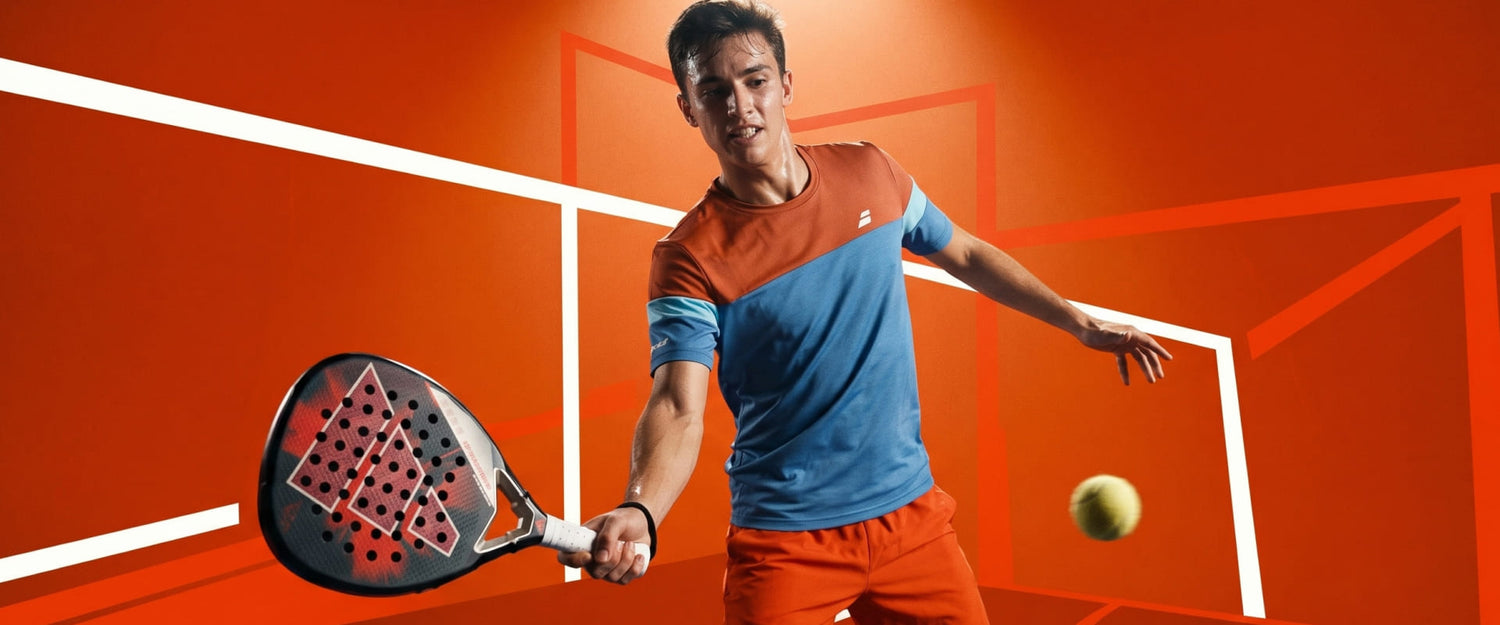
Keys to preventing injuries in paddle tennis

KEYS TO AVOID TENDINITIS IN PADEL
Tendonitis can be a very painful ailment that keeps you off the court and out of matches for weeks. In fact, it can become chronic if not properly treated. In padel, the most common types of tendinitis are:
This injury is more commonly known as "tennis elbow." It is associated with racket sports and manifests as acute pain on the outer region of the elbow. It arises from the repeated use of the finger extensor muscles.
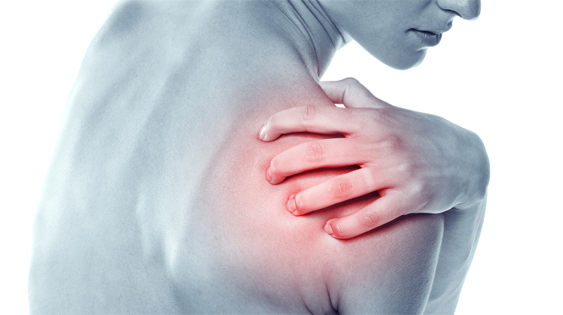
2. Shoulder Tendinitis.
This is shoulder impingement caused by repetitive and continuous movements. The tendons surrounding the joint capsule become inflamed.
3. Achilles Tendonitis
This is a common injury when there is not a good training base. Pain is experienced in the sole of the foot and over the Achilles tendon.
If the injury occurs, the main objective is to relieve pain and reduce inflammation in the affected area. To improve these symptoms, we should minimize mobility in the affected area, using a splint or a removable orthopedic device. Applying heat and cold also relieves pain in the affected area.
For the prevention of tendinitis, we should avoid repetitive movements and overexertion of the arms. It is always good to stretch muscles well before and after exercise to prevent possible injuries. If we feel pain in the area while performing a certain exercise or training session, it is best to stop and rest to prevent the problem from becoming chronic. We also recommend that you maintain good hydration, as it always helps to maintain better vascularization of the area. The first symptom would be the appearance of shoulder pain when raising the arm. If the injury has progressed, it is normal for the player to have discomfort at rest and even be unable to sleep on that shoulder due to the discomfort. [embed]https://youtu.be/RCxAzwnA1hI[/embed]Once the pain subsides, it would be necessary for the patient with tendinitis to undergo stretching physiotherapy and strengthen the muscle and tendon to improve healing and prevent future injuries. Also, once the pain has passed, we will carry out a program of stretching and strengthening of the affected region.
In summary, an effort or overexertion in one area of your body can cause some muscles to work more than others, weakening the tendon area. To address this, reduce mobility in the affected part, rest, and apply heat to the affected area to relieve pain.