The most common padel injuries

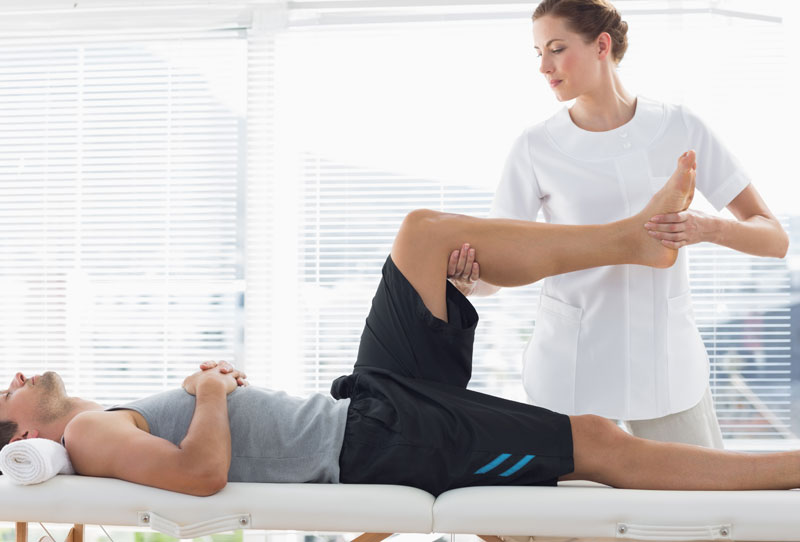 What are the most common padel injuries?[/caption]
PADEL: MOST COMMON INJURIES
Padel has become a benchmark sport thanks to the multitude of athletes who play it today. But, as in all sports, injuries are a great threat and precautions must be taken to avoid them.
We can highlight that the most common padel injuries are related to the joints. This is mainly due to the continuous repetition of the same movements.
But also, performing movements incorrectly can cause joint injuries.
WARM-UP IS KEY
On the other hand, the key to avoiding injuries is to perform an adequate warm-up before and after the match and to hydrate correctly. But we can also avoid getting injured by recovering 100% from previous injuries, as a bad recovery can be a factor for re-injuring ourselves in the future.
- You may be interested in: types of warm-up in padel
Next, we will look at some of the most common injuries and how we can prevent them.
EPICONDYLITIS, THE MOST FEARED INJURY
Lateral Epicondylitis or 'Tennis Elbow' is one of the most frequent injuries in the world of padel. It is caused when the forearm muscles are overused. This causes inflammation of the tendons and, as a result, tears that generate pain.
[caption id="attachment_6338" align="aligncenter" width="800"]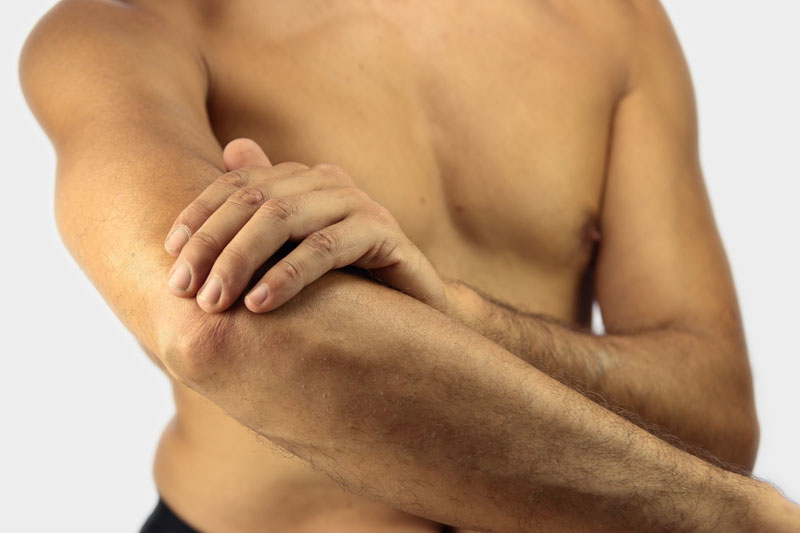 Epicondylitis in padel, one of the most frequent injuries.[/caption]
HOW TO TREAT EPICONDYLITIS
To treat this injury, we must apply ice to the elbow for two or three days every 5 or 6 hours for 15 or 20 minutes until the pain disappears. Also, we should consult about some anti-inflammatory medication to reduce the injury. Another cure is to use a tennis elbow strap to prevent the forearm from vibrating. But the most important thing is that while we have Lateral Epicondylitis, we have to reduce our playing frequency.
BE CAREFUL WITH SPRAINS IN PADEL!
Sprains are also common in this sport. This injury is very common since while playing there is a possibility that we twist our ankles and end up with a sprain. Therefore, it is very important to wear the appropriate footwear, that is, wearing padel shoes reduces the possibility of injury, and good footwear also prevents blisters on our feet.
https://www.youtube.com/watch?v=cmU238CiwZQTo recover from a sprain, we should apply heat and cold to achieve a temperature contrast and thus progress in our injury. We should also go to the doctor for some anti-inflammatory medication and even ankle immobilization may be necessary. But the fundamental thing, as in any other injury, is to recover completely, since a poorly healed sprain is a big problem.
PLANTAR FASCIITIS
Plantar fasciitis is also one of the most frequent injuries in padel. This consists of intense pain in the sole of the foot. It occurs as a result of overuse. In padel, this injury can appear due to excessive foot rebound or by repeatedly overusing the ready position.
- You may be interested in: Siux combats plantar fasciitis with its new socks
The cure for fasciitis is usually slow, but rest is essential for full recovery. During the injury, a series of exercises must be performed to improve the damaged area; these exercises will depend on the phase we are in.
- You may be interested in: the best methods to recover from plantar fasciitis
First, exercises are performed to relieve pain. Then, stretching exercises are practiced to prevent the injury, and finally, strengthening exercises are carried out. Although it is also common among players to use insoles with support to reduce the injury, or even to bandage the foot area overnight.
EXERCISES TO AVOID INJURIES
Finally, remember a series of methods that will help us to prevent injuries in padel. Among these, we can highlight that an adequate warm-up reduces the possibility of injury. Also, hydration is key in all phases of the match.
Another tip is to wear the right footwear. We must avoid sudden stops and starts, as these can cause twists. And finally, and no less important, we should not overtrain, that is, we should not make efforts that exceed our limits, as this can cause serious overload injuries.