Welcome to the review of the
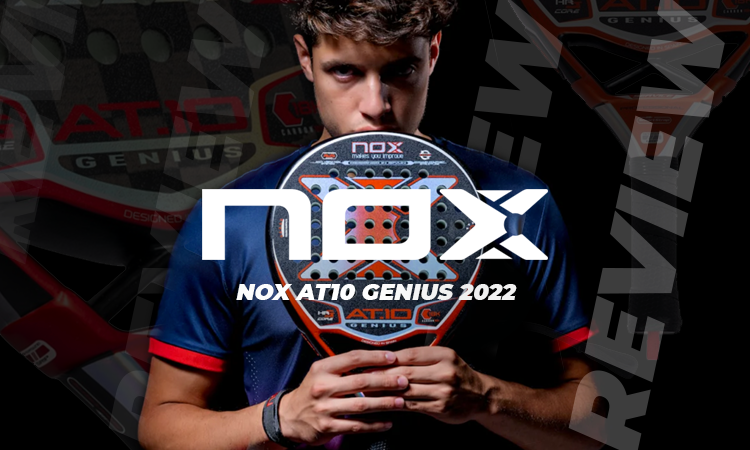
Nox AT10 Genius 2022, Agustín Tapia's new racket. We are looking at one of the most famous weapons in history, which for a long time has been on the list of best-selling rackets. This new 2022 edition arrives with a fresh new look to further improve on what its predecessor offered. If you are an experienced player looking for the best quality and are familiar with Tapia's racket, you will surely be impressed after learning about its new features.
Full review of Agustín Tapia's new racket
New features of the 2022 version
Agustín Tapia's new racket arrives with a completely renewed design, with an updated color combination. However, that is not the big news, as it does not influence its performance. The
big news of the 2022 edition of the AT10 Genius is the
new 18K Carbon fiber on the faces, replacing the 12K fiber of the previous version. This causes a change in the
playability of the racket, which we will explain a little later.
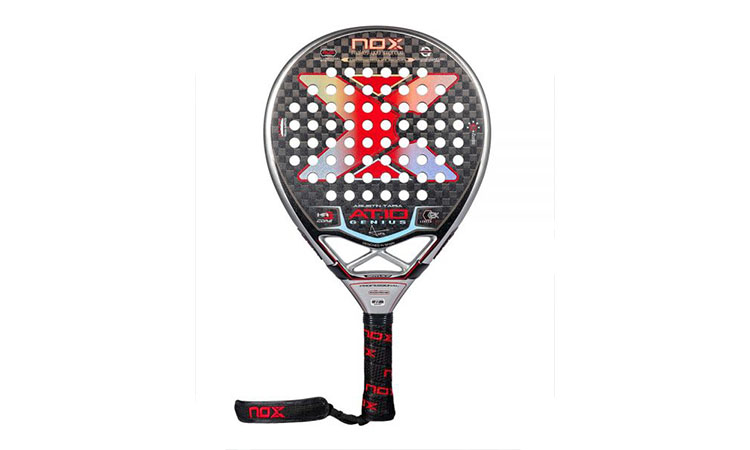
NOX AT10 GENIUS BY AGUSTIN TAPIA 2022[/caption]Additionally, the new AT10 Genius 18K comes with a new
Smartstrap wrist strap. This
cord can be replaced without having to manipulate the base of the racket's grip. Finally, Tapia's new racket was created under the supervision of
Testea Pádel, a laboratory that
certifies it against frame or face breakages. With this, we know that we are facing a premium quality racket.
Playing style and recommended level
Tapia's racket has not lost its characteristic essence. It continues to be a
versatile racket to find a balance between
control and
power. What a player wants is to have the possibility to attack, but also to defend. The racket stands out for its powerful smashes, but also for its precision and repositioning shots. That is why it still has the same
inverted teardrop shape, which perfectly balances the weight between the head and the grip.As for the playing level, the AT10 Genius 18K belongs to the
Luxury range, which is the highest. The racket was designed to be in the hands of
advanced and
professional players. This is another feature of the racket that has not changed.
Main characteristics of the frame and faces
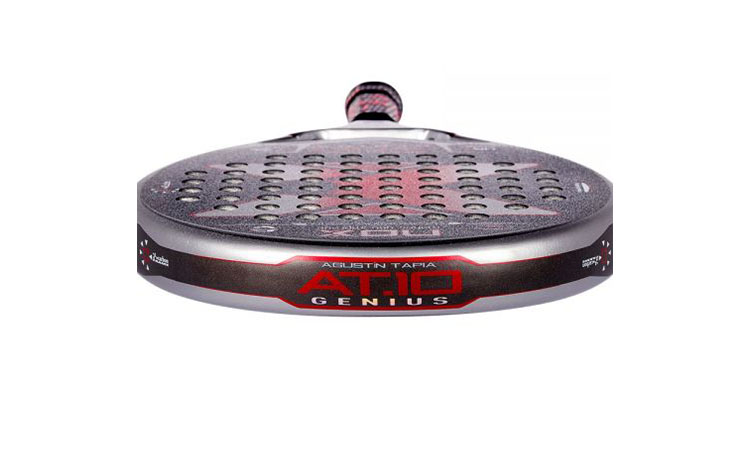
Now, going into the technical details of the racket, we will start with the frame and faces. The
frame is made entirely of
carbon, the most resistant material used in professional rackets. This frame guarantees the
firmness of the structure, as well as more resistance and a more aggressive performance.
Frame[/caption]Regarding the faces, they feature the new 18K carbon fiber, which is one of the new features mentioned at the beginning of this analysis. This new fiber is
stiffer than the 12K fiber of the previous version. This means that the player will experience a more
solid feel when hitting the ball, which will translate into more
power. Thanks to this change, Agustín Tapia's new racket will have a performance closer to total
offense.
The inside of the racket
The interior of the Nox AT10 Luxury Genius 18K is very relevant for playability. This core is made of
HR3, a rubber that is already well-known to Nox fans. It is a
high-density rubber, meaning it is a bit
harder than other rubbers like Eva Soft or Eva Ultra Soft. With this hardness, the player will be able to hit with more power, as high density helps favor aggressive performance.
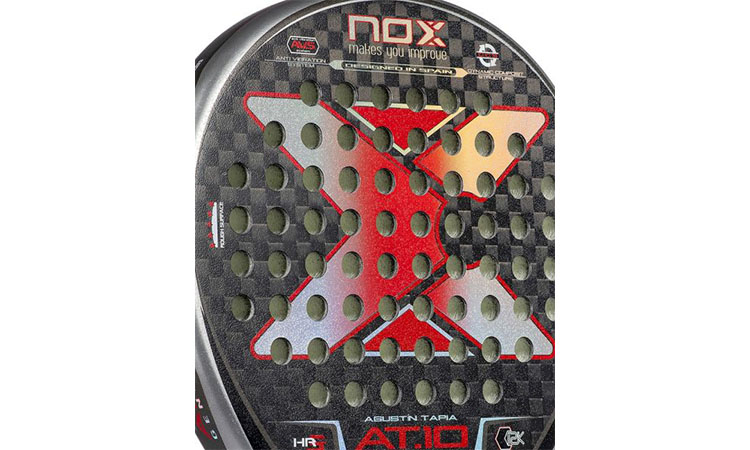
Faces[/caption]
Technologies of Agustín Tapia's new racket
Agustín Tapia's 2022 racket features the same range of technologies as the 2021 version, plus the new technologies mentioned in the first section of this analysis. We are talking about well-known features such as the
Rough Surface textured faces for higher quality
spin. Similarly, the famous AVS system is incorporated, which reduces vibrations generated by impacts. Thanks to
AVS technology, players have less risk of suffering elbow injuries such as
epicondylitis.
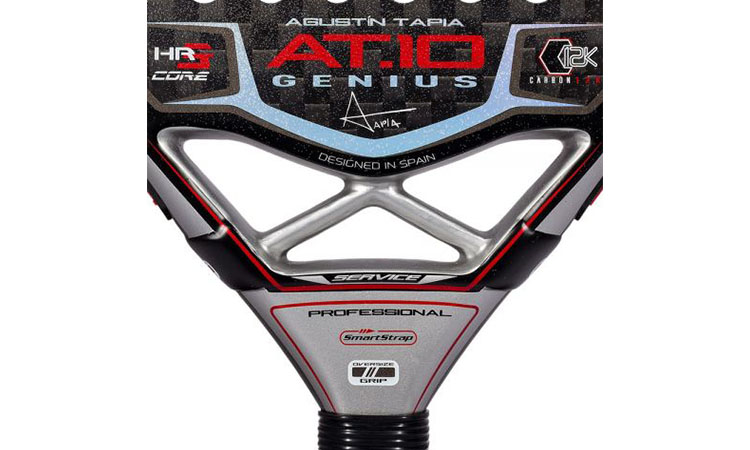
AVS System[/caption]Another well-known technology that reappears in this version is
Dynamic Composit Structure. This refers to the pursuit of a smoother connection between the frame and the faces. In this way, the differences in hardness are eliminated, so that the player does not lose control even when the ball makes contact very close to the frame.