One of the most important topics in this sport is padel positions. On the court, each player has a role, which can be forehand or backhand. It is essential to know the functions of each, as well as the requirements to perform them correctly. Below, we will tell you how to identify which side of the court would be best for you to play, which is, without a doubt, one of the best
tips for improving in padel.
Everything you need to know about padel positions
Which of the two padel positions is the best?
There is much controversy about a player's position on the court. Many players point out that the classification of court sides is actually something
subjective. Theory indicates that depending on the role, the player should have certain qualities and skills. For example, it is believed that the most talented and aggressive player should always be on the backhand, but in reality, this can vary. It is possible for an aggressive player to perform better on the forehand and vice versa.
However, on this occasion, we will stick to the
theory, as it is usually the most common when discussing padel positions.
How can we choose our side on the padel court?
From the moment a padel player steps onto the court for the first time and starts doing some volleying, they can begin to define their favorite side of the court, or at least where they
feel most comfortable.
It is important to understand that in padel, as in other sports, the position or area of the court where you play will have
particular objectives. This is what differentiates a forehand player from a backhand player.
The player's skills and comfort are some of the most important factors when choosing the court, as well as the player's game type, whether aggressive or more strategic. Another factor that influences the decision is whether the player is right-handed or left-handed.
Below, we will tell you about some of the characteristics that could help you define which side of the court you should stand on.
Characteristics of a forehand player
Generally, the forehand player usually has a more
strategic and
defensive profile. They prefer
security in their shots, trying to
control each impact to prioritize placement over power. The forehand player's strongest quality is
tactics; generally, they have very precise hitting. One could say that this player's task is to set up a point so that their partner finds the perfect moment to finish it.
[caption id="attachment_12188" align="alignnone" width="1100"]
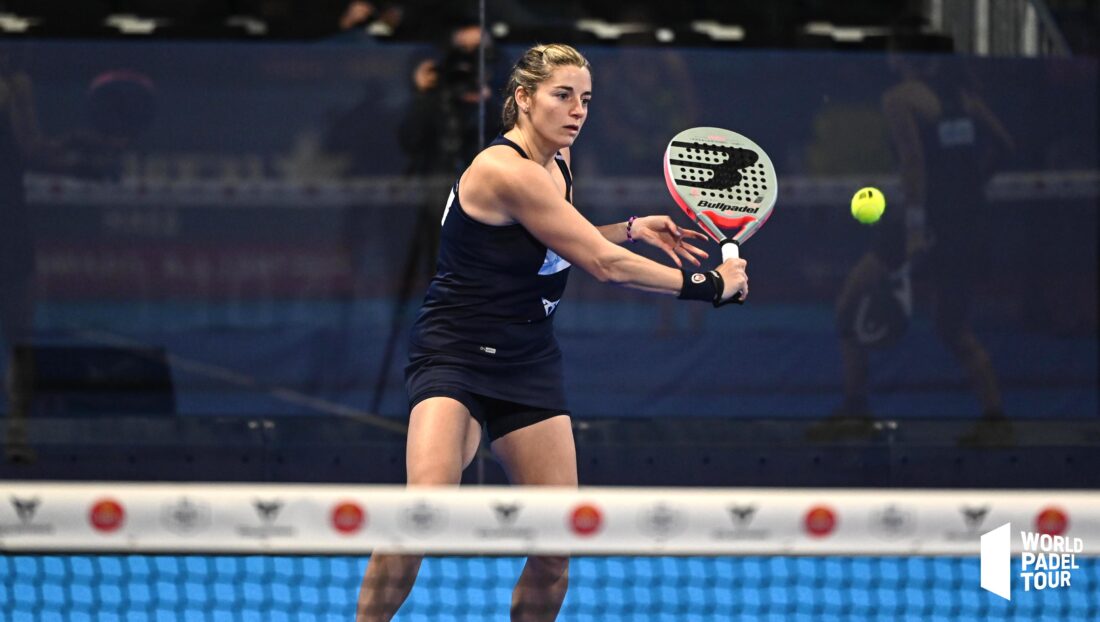
Drive Player - Ale Salazar No. 1 in the WPT ranking.
Source: World Padel Tour[/caption]
The forehand player generally has a good
volley, as it is a type of shot used to recover the court and prepare for attack. Likewise, they have a very good
bandeja shot and must have the ability to rescue awkward shots.
Similarly, forehand players tend to be
consistent, hit many balls, and make very
few errors. In addition, the forehand player often has the task of setting up the point so that the backhand player can hit hard and win the point.
As we mentioned in the first section, being left-handed or right-handed also influences the choice of a side. In the case of the
left-handed player, it is recommended that they choose the
right side of the court, because they will have the racket in the center of the court and not near the side wall.
Similarly, experts recommend that a
left-handed forehand player play with a
right-handed backhand player, so that both have their 'forehand shot' in the center of the court.
Characteristics of a backhand player
The backhand player is the one who must
cover a wider sector of the court. In fact, in theory, in this role, the player must reach a ball even if it goes a little beyond the line, that is, invading a small part of the forehand player's side of the court. This is practiced this way because it is much more convenient for the backhand player to attack the ball with a good forehand shot, instead of the forehand player responding with backhand shots that might not have enough power and control. Although, this could change if the forehand player is a
left-hander, we will explain this later.
[caption id="attachment_12187" align="alignnone" width="1100"]
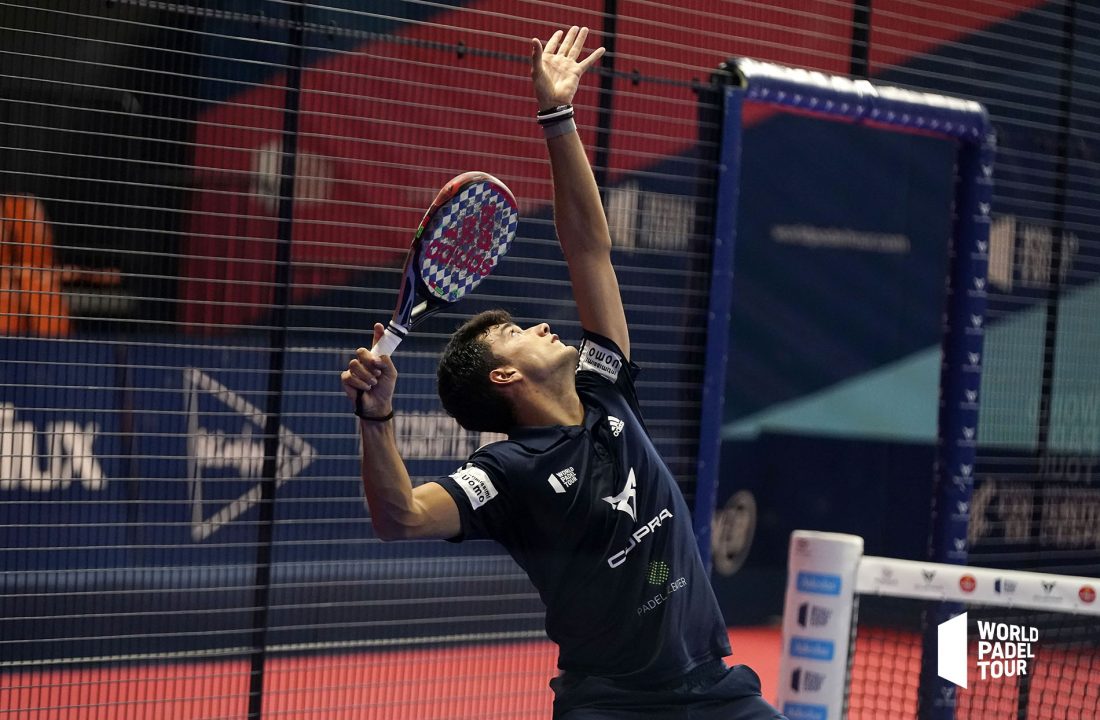
Backhand Player - Ale Galán No. 1 in the WPT ranking.
Source: World Padel Tour[/caption]
In theory, the backhand player also tends to be the
most aggressive. They have good
smashes and good
offensive volleys. This player is also safer near the net and has great
forcefulness to smash the ball and get it over the walls.
The advantages of having a left-hander on the team
In the forehand player section, we talked about left-handers, because they need to be more careful when choosing or being chosen by a partner. Many right-handed players always look for a left-handed partner. This could completely change the advantages and disadvantages of each player's role.
As we mentioned in this post, the combination of right-handed and left-handed players is important, as it is noticeable when covering the court. When the team is composed of a right-handed and a left-handed player, both players will be able to cover the
center of their side of the court with a
forehand shot. Additionally, it reduces the
responsibility of the backhand player to cover a larger area of the court, as the responsibility is now divided between
both players.
There are also padel pairs made up of
two left-handed players; in fact, this has been seen at a professional level. Left-handed players are usually
highly sought after, as they are not abundant and add some variation to their shots. This causes some right-handed players to have certain problems when returning an attack made by a left-hander.