 Choosing the right padel shoe sole is essential to develop your game with the greatest possible comfort. That's why you always have to make a good choice.
A poor choice can affect the player's performance and increase the likelihood of injuries. So it's a key aspect, as there are different types of soles, each designed to suit a different profile. That's why, below, we'll tell you about the most recommended types of padel soles.
Choosing the right padel shoe sole is essential to develop your game with the greatest possible comfort. That's why you always have to make a good choice.
A poor choice can affect the player's performance and increase the likelihood of injuries. So it's a key aspect, as there are different types of soles, each designed to suit a different profile. That's why, below, we'll tell you about the most recommended types of padel soles.
What is the most suitable type of sole for padel shoes?
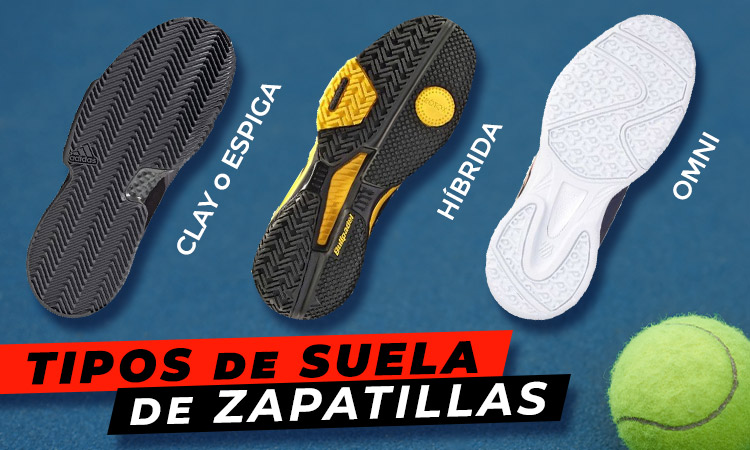
Herringbone or Clay Sole
The herringbone sole is the most famous in tennis, but it is now also the most used in padel shoes. The clay or herringbone sole can be quickly identified by its pattern. It is composed of parallel lines in the shape of triangles, and they do not have cleats. The main quality of this type of sole is traction, it has the strongest grip on the ground.
This is very convenient when playing on a padel court that has a lot of sand, to avoid unwanted slips. In addition, this type of sole, lacking cleats and other structures, has greater durability and is more resistant to wear. Another advantage is that, despite having a strong grip, it also allows sliding when needed.
This type of sole is recommended for players who are just starting out, as they do not have sufficient control of their movements, they should prioritize safety when moving around the court. On the other hand, it is important to note that excessive grip can also increase the risk of joint injuries.
Omni sole
The omni sole can be identified by its pattern composed of small dots or micro studs. In fact, many players know it as the "dot sole". This type of sole also specializes in grip, its strong point is artificial turf. However, one of its negative points is that it is less versatile, meaning it is only suitable for that type of court.
If you encounter a court with a concrete surface, or an artificial turf court with a lot of sand, the traction will not be sufficient. This could lead to more slips and less durability of the materials. It could be said that this type of sole is the least common in padel.
World Padel Tour Sole
After several years in development, a new type of sole for padel shoes has been launched. This sole is called "
World Padel Tour", as it is specific for courts with a low amount of sand and curly grass, like those on the circuit.
Padel shoe manufacturers have opted for this type of sole. Each has created its own version of it, so not all follow the same pattern.
Bullpadel has decided to mix the WPT and Clay soles, creating a unique version that allows you to play without problems on both curly grass and classic courts. On the other hand,
Wilson is another brand that is committed to this type of sole. In this case, they have a pattern that
is characterized by circumferences found at the front and back of the sole, which allows for easier movement but with less grip. Asics has also decided to implement this type in its shoes, such as the new
Court FF 3
More and more brands will choose this sole option for padel shoes.
Allcourt Sole
Also known as mixed or hybrid. This type of sole has become enormously popular, now becoming one of the favorites among players. It is a combination of elements from herringbone soles and omni soles with the aim of providing functionality on any type of court, whether artificial turf, concrete, with little or a lot of sand. Thanks to this feature, there is no need to worry about the court surface, as the shoes are adaptable to all of them.
Many of today's most prestigious brands have begun to incorporate this sole into their most famous models. Some of the best-selling shoes today, which have this type of sole, are those from the new Bullpadel collection, such as the Hack Vibram PL 23V.
Which of them is better?
So,
which type of sole is most recommended for padel? Really, there is no one type of sole that is generally better than another. The choice of the appropriate sole depends on the surface you will be playing on. If you usually play on standard padel courts with the basic characteristics accepted by the
FIP, then it is recommended to use a
Herringbone sole. This type of sole is quite versatile and can adapt to other surfaces as well.
On the other hand, if you need traction on artificial turf courts, then it is recommended to use shoes with an
Omni sole. But
Allcourt soles are also recommended for general performance on different surfaces. Therefore, the choice of sole should be based on the surface of the court where you will be playing.
Problems with not choosing the right sole
Once we have clarified where and why we should use one type of sole or another, we can better understand the problems that arise when we make a bad choice.
Lack of traction on the court is our main enemy, which can result in uncontrolled slips and increase the risk of knee injuries, such as the famous triad, as well as hamstring, femoral biceps, adductor injuries, and even a simple sprain. In addition, footwear can wear out prematurely and have low durability if it is not used on the appropriate surface.