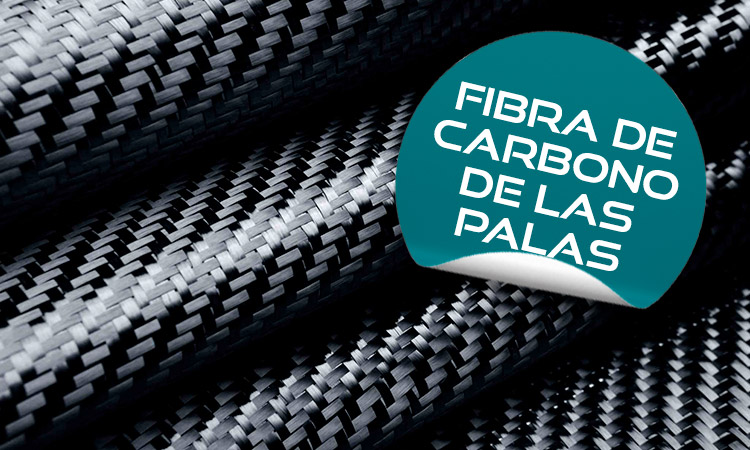
Padel rackets can be made from various materials, but without a doubt, the most common is carbon fiber. However, there are different types of carbon fiber in padel, with some variations in their manufacturing and performance. If you're wondering
how to choose your padel racket and don't yet know the different carbon fibers available, we'll explain it all below.
Types of Carbon Fiber in Padel
Differences Between Carbon and Fiberglass
Before discussing the different types of carbon fiber in padel, it's necessary to answer some questions. One of the most frequent relates to the
difference from fiberglass, as players often ask which one is better or which they should choose.
The main difference between carbon and fiberglass is
hardness. Carbon fiber is usually more
firm and rigid, while fiberglass has a more elastic composition. This affects the hitting sensation and playability. A racket with fiberglass faces has a softer strike and more bounce for the ball, compared to a carbon racket, which stands out for its solidity, aiding aggressiveness.
However, neither is inherently better than the other, though, generally,
carbon tends to be more durable than fiberglass. They are simply recommended for a specific playing level. Typically, professional rackets are carbon, while beginner rackets are fiberglass.
The Differences Between 3K, 12K, 18K, and 24K Fibers
If you've spent a good amount of time searching for padel rackets, you've likely noticed that there are different types of carbon fibers. Generally, they are categorized by a number and letter, which can be
3K, 12K, 18K, and 24K. This nomenclature refers to the
thickness of the fiber, which is determined by the
number of threads that make up the fiber. For example, a 3K fiber has 3,000 threads, while a 24K fiber has 24,000. Consequently, the latter will be a thicker fiber.
This difference in thickness means that striking the ball behaves differently. In most brands, this differentiation also refers to the
hardness of the racket. That's why the
24K carbon fiber would be the hardest, while the
3K fiber would be the least hard. However, there are brands that use this classification differently; one of them is Siux.
Siux Carbon Fibers
The
Spanish brand Siux is different from other brands when it comes to the classification of its carbon fibers. Like other brands, it also has 3K, 12K, 18K, and 24K fibers, but for them, it means the
exact opposite. That is, for Siux, the
3K carbon fiber is the hardest of all, while the
24K fiber is the softest and most elastic. That's why if you're thinking of buying a Siux racket, you need to consider this detail. If you're looking for a comfortable racket with a lot of ball bounce, you definitely need to choose a racket with 24K carbon fiber.