[caption id="attachment_13137" align="alignnone" width="750"]
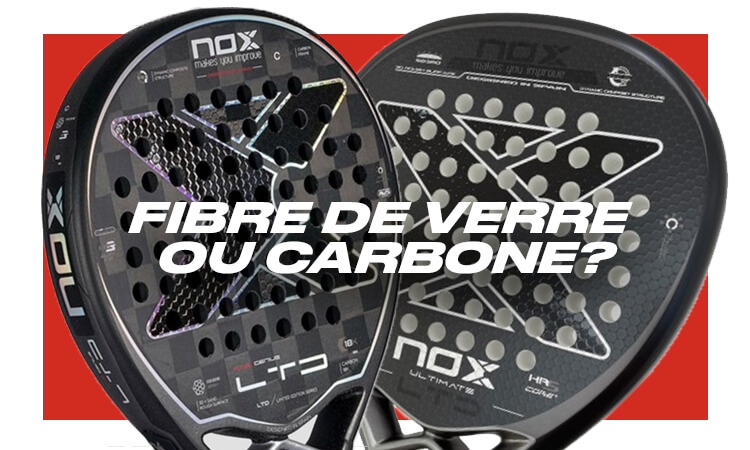
New Nox Ultimate Power Ltd rackets[/caption]
In the padel racket market, there are two types of rackets: fiberglass and carbon fiber. This creates a very recurring doubt among players, who don't know which one to choose. Below, we present the main differences between each of them, so you can choose the one that best suits you. In addition, we present a carbon padel racket and a fiberglass padel racket that have been released this season, in the
Nox padel rackets catalog.
New carbon padel racket and Nox fiber padel racket
Types of fibers in padel rackets
As we mentioned at the beginning, fiberglass and carbon fiber
are the two main materials used to make a padel racket. These materials arrived some time after the beginnings of padel, since at first, all padel rackets were made of wood.
A carbon padel racket and a fiberglass padel racket have their
own characteristics and behave differently. However, although they are the most chosen materials by brands, they are not the only ones found on the market. Today, many brands have begun to experiment with materials such as
graphene,
graphite,
basalt,
kevlar and
aluminum. However, they are usually always accompanied by carbon or fiberglass.
Fiberglass padel racket or carbon padel racket?
Now that you know that carbon and fiberglass are the most commonly used materials for manufacturing padel rackets, we think it is relevant to explain the difference between them.
Carbon fiber padel rackets
Carbon rackets tend to have a
more solid feel, as this material is
harder than fiberglass. This is its main characteristic, as well as its ability to maintain a very striking lightness. On the market, there are also different carbon fibers, classified into 1K, 3K, 6K, 12K, 18K, 21K and 24K. The difference between them lies in the amount of carbon filaments inside, which changes the hardness of the touch.
One of the great advantages of carbon is that it is usually a little
more durable than fiberglass, as its composition is stronger and more
resistant to wear.
Fiberglass rackets
Fiberglass is characterized by a slightly more
elastic composition than carbon. This is, in fact, one of its main properties, the most advertised by manufacturers. Thanks to this better elasticity, fiberglass rackets tend to be
softer, more comfortable and offer a little more
ball rebound. This is why most beginner and
intermediate level rackets are made of this material. They are more common among learning players, although it is also possible to find fiberglass rackets belonging to professional ranges.
Nox Ultimate Power LTD rackets, don't let them escape!
One of the brands that usually clearly marks the difference between carbon and fiberglass is Nox. In fact, it recently launched the
new Ultimate Power LTD racket series in a special edition. But the most striking thing about this launch is that this series was launched with two versions: a carbon padel racket and a fiberglass padel racket.
The
Nox Ultimate LTD Carbon is the carbon version, which has a 3K carbon fiber finish on its faces. On the other hand, the
Nox Ultimate LTD Fiber is the fiberglass version, which also has a 3K fiber on its faces, but with elastic fiberglass.
This composition of the faces is the only difference between the two models. Both rackets are
power rackets aimed at
advanced and professional players. They have a
diamond shape, a
high balance and a carbon tubular frame. In addition, they have other interesting elements such as a harder
HRS core,
rough faces for spin shots and
Antivibration System technology to reduce vibrations generated by ball impacts.