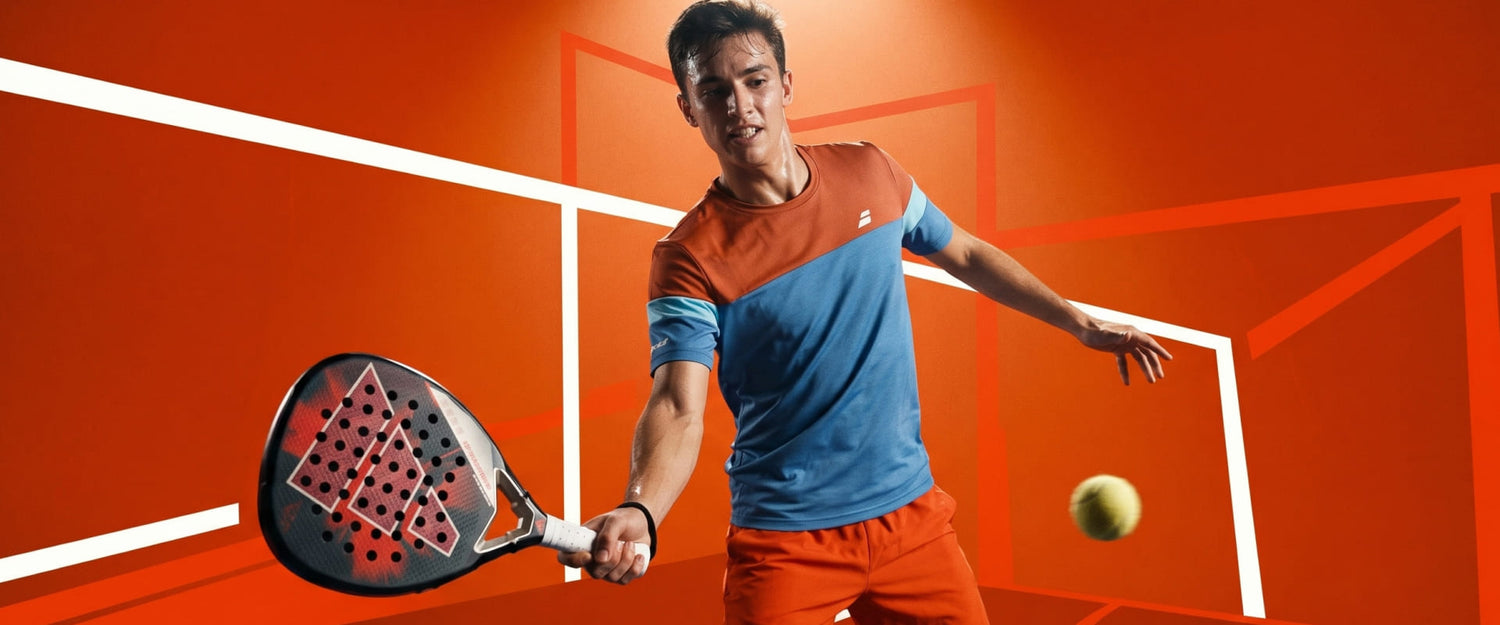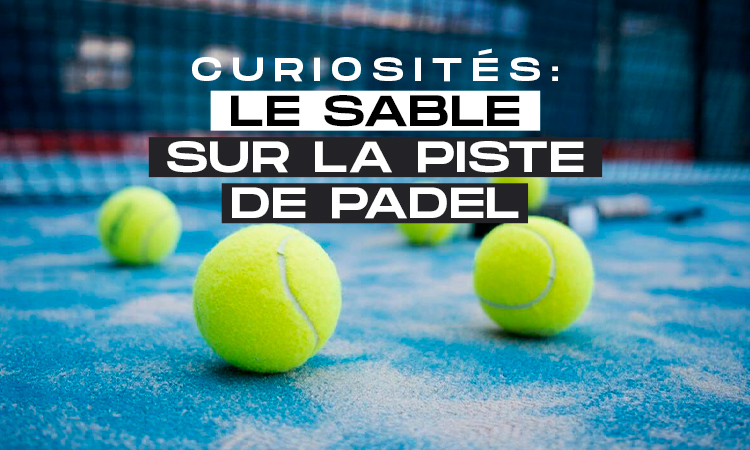
The padel court is the sacred temple of players; a perfectly mowed lawn, clearly marked court lines, and sparkling clean glass so spectators can enjoy the magic of padel players. But have you ever wondered what padel courts are made of? Why is there sand? What kind of surface can be found in padel clubs? Find out all about it below.
Types of surfaces on padel courts
Today, most padel courts have artificial turf surfaces, mainly because these are the features found in professional padel. However, there are still padel clubs that have courts with different surfaces. Here are some of the ones that can still be found:
-
Artificial turf. These are the most common in the world of padel, both amateur and professional. This surface is quite durable, although it requires a lot of repairs. On artificial turf, the ball has a slower pace and a little less bounce, as it cushions and absorbs impacts. The most commonly used types of artificial turf for padel courts are polypropylene and polyethylene.
-
Cement. Cement courts are no longer very common; this type of surface was used in the early days of padel. Over time, it was noticed that it was more dangerous for players, as the impact on the knees is greater. However, there are still padel courts with this characteristic. On cement courts, the ball bounces more and moves faster.
-
Synthetic resin. Synthetic resin is another very popular surface in competitive padel, even on the World Padel Tour. For many players, it is the preferred surface, as it always offers a good bounce to the ball and dynamism in the game, but at the same time, it cushions footfall very well and allows for sliding.
Why do padel courts have sand?
One of the most common characteristics of a padel court is sand. It is present in almost all courts, especially if they are made of synthetic resin or artificial turf. However, there are players who do not know why the sand is there and have no idea of its necessity. In fact, the inclusion of sand is already a standard activity for padel court manufacturers.
These are the main purposes that sand fulfills on the padel court:
-
It prevents injuries. Sand allows players to slide more safely and naturally, preventing their shoes from getting stuck on the surface.
- It improves sliding, a very useful movement during matches to reach a complicated ball.
- Sand also improves the bounce of the ball, making it more consistent.
- It prevents the growth of fungi and other organisms, as it also prevents moisture accumulation on the surface.
- It increases the durability of artificial turf or synthetic resin. Without sand, the turf suffers more damage and wear, as the sand is not there to protect it.
Padel court maintenance
Court maintenance is one of the
main activities of a padel club. The condition of the surface is a factor that will influence players' desire to visit it. But that's not all; proper court maintenance also ensures safe padel play.
Basic maintenance and upkeep are tasks that can be
performed daily. This includes superficial cleaning to remove debris, dust, or anything that has been touched during a match.
However, padel courts also require more in-depth maintenance, which is usually carried out at regular intervals. This maintenance must be thorough and includes activities such as
redistribution of sand,
removal of fungi, checking the condition of the court's
joints,
nets, and
surface damage.