When choosing a new
padel racket, there are very specific details that players take into account, one of them being the weight of the racket. But does it really affect gameplay? What are the types of rackets available based on their weight? Should women and children use lighter rackets? Find out everything you need to know about padel racket weight before buying one.
Different types of rackets based on their weight
The weight of padel rackets can vary depending on the model. There isn't really an official classification of rackets by weight, however, many people often classify them into
light rackets,
medium-weight rackets, and
heavy rackets. It's important to mention that the racket's weight is not directly linked to the player's skill level or age.
Light padel rackets
Rackets fall into the
light racket category when their weight is below
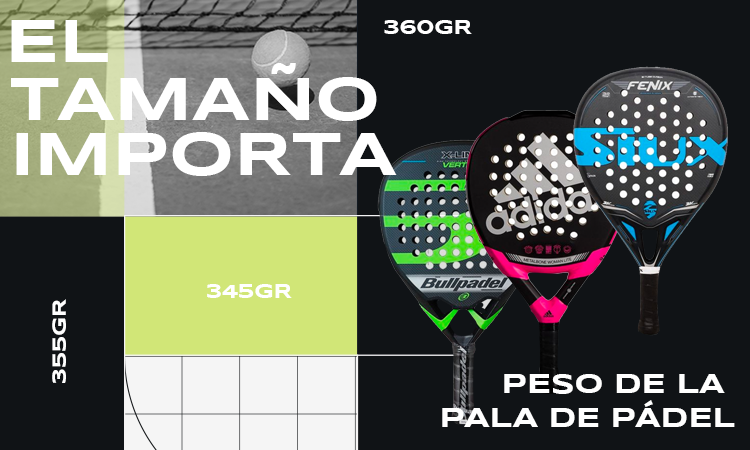
355 grams. The main advantage of light rackets is that they are more maneuverable, with lighter movements and less strain on the arm. That's why they are often chosen by young players or those just starting out, although some professional players still choose light rackets. One of the clearest examples in this category is the
Adidas Metalbone Woman Lite, which, with its Lightweight construction, becomes one of the best light rackets for advanced players.
Medium-weight padel rackets
Medium-weight rackets typically weigh between
360 and 370 grams. This is the type of racket that brands produce the most, as they are the most
versatile to adapt to any type of player. These rackets offer a perfect balance between resistance, power, and mobility. In this category, the number of existing rackets is enormous, as this is the weight found in most rackets. However, one of the most popular this season is the
Bullpadel Vertex X-Line, a special edition of one of the most famous rackets in history.
Heavy padel rackets
Finally,
heavy rackets are those that weigh
more than 375 grams. These types of rackets stand out for their great
power and
high-resistance structure. However, they can be a bit uncomfortable for players who don't have much arm strength or who are too young. Nevertheless, these are the rackets that boast greater durability, as the solidity of their structure tends to be higher, with the disadvantages of greater fatigue and slower movements.
One of the most popular heavy rackets of the season is the
Siux Fenix 3K, for advanced and professional players.
Other factors (besides weight) that influence a racket's playability
Weight isn't everything, and it's not the only factor that can make a racket feel lighter or heavier. These are some of the characteristics that influence a racket's playing feel:
- The balance. This refers to where the majority of the weight is concentrated in a racket. Rackets with a high balance concentrate the weight in the head of the racket, which can make it feel heavier. Medium balance places the weight right in the middle of a racket, making it feel more balanced. Finally, rackets with a low balance concentrate the weight in the grip, increasing the feeling of lightness and maneuverability.
- The shape. The shape refers to the form of the racket head. Diamond-shaped rackets tend to feel heavier. Teardrop shapes are balanced, combining a diamond racket with a round racket to highlight versatility. Round-shaped rackets are usually the most maneuverable because they commonly have a low balance.
- The profile. This feature refers to the width of the racket. Standard adult rackets have a thickness of 38 millimeters, while junior or children's rackets may have a few millimeters less in thickness. This can also subtract a few grams from the racket's weight and modify its maneuverability.
-
Additional accessories. Accessories such as protectors, anti-vibrators, and overgrips also add weight to padel rackets, although it's a smaller amount, as these accessories don't exceed 5 grams in weight.
Rackets for men and rackets for women?
When discussing racket weights, many brands and stores tend to classify them by gender, meaning rackets for men and rackets for women. This happens because throughout history, a difference in racket preference has been observed between men and women. Female players and young players tend to choose lighter rackets for more comfortable handling.
However, this is not a general and mandatory rule. In reality, it is highly recommended that male and female players
try out their rackets and choose the one that feels most comfortable. This means that a "men's" racket can be chosen by women and vice versa.
Not all male and female players have the same body type, weight, and physical condition, which is why it is important to
break the myth that a woman must specifically choose a female padel racket, even if brands continue to manufacture rackets aimed at a specific gender.