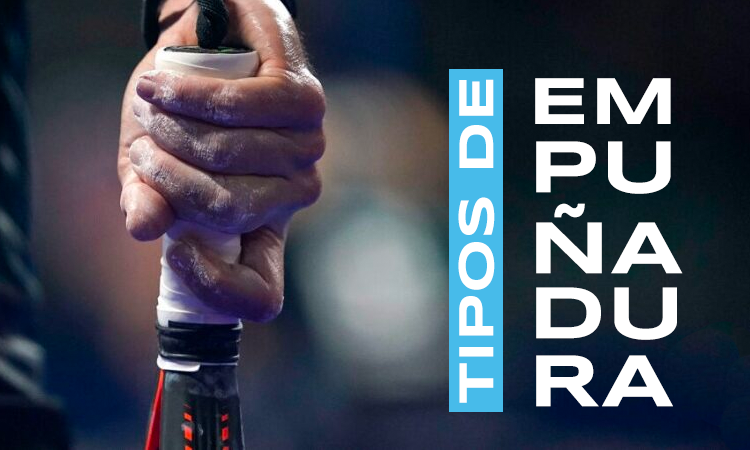
The way you grip your padel racket is based on a theory. There are different types of grips and all of them play an important role in the player's performance and comfort. In addition, it is also possible with a
padel overgrip. How should you hold the racket? How many types of grips are there and which is the best? Is it advisable to use a padel overgrip for the racket? Find out all about it here, on the Street Padel blog.
Importance of the correct grip on a padel racket
Before knowing the existing types of grips, it is necessary to know that
holding the racket correctly is key to good performance and injury prevention.
Regardless of whether you use a continental grip, forehand grip, or backhand grip, the important thing is to learn how to hold them perfectly. This will help ensure that neither the wrist nor the fingers are in an
uncomfortable, tense, or incorrect position,
releasing tension from different parts of the arm and
preventing injuries in the long term.
Holding the racket correctly will also have an impact on the player's performance. With the right grip, it is much easier to
maintain control of the ball and also
increase power in the shot. Learning to master a grip is the best way to fully master the padel racket.
Ways to grip a racket and the advantages of a padel overgrip
When we talk about the padel grip, we can refer to the part we hold, that is, the handle of the racket. But the word "grip" is also synonymous with the
way of holding a racket. That is why they have been classified, and there are currently many types of grips, although some are used more frequently. These are the ones we will explain below.
The continental grip: the most popular of all
The
continental grip is surely a pair of words you will hear repeated a lot in this sport. It is the most
popular and
universal way to hold the racket. This happens especially at the
beginner level; padel instructors and coaches always recommend their new students learn to play with the continental grip. So, why is it the most used?
This grip is the most
versatile of all. It allows you to execute the entire repertoire of shots without having to modify your grip on the racket. In addition, it gives the wrist more freedom of movement. With this grip, players can execute
forehands, backhands, lobs, bandejas, and
smashes, that is, the essential shots.
Eastern forehand grip
As the name indicates, this type of grip is chosen to execute
forehand shots. The great advantage is that these types of shots can have greater control and more adequate power. But the disadvantage is that it is more difficult to hit backhands with this type of grip. To do this, the player would have to
modify the grip if seeking more security in the shot. With this grip, the palm of the hand rotates a little until it coincides with the
face of the racket.
Eastern backhand grip
The eastern backhand grip is the opposite of the forehand, used to
facilitate backhand shots. It is usually recommended for players who do not have much strength in their
forearm and who find it difficult to hit backhands with a continental grip. For this type of grip,
the fist is rotated to the opposite side, mimicking the movement a motorcyclist makes to accelerate.
Is it advisable to learn the different types of grips?
The quickest answer to this question is yes. Knowing and learning the different types of grips does not affect the player's skill development. However, this does not mean that one has to specialize in all types of grips. It will always be advisable to fully learn how to hold the racket with the
continental grip, as it is the most versatile and offers the most
advantages to the player.
However, knowing the other types of grips can be an advantage for the player, although it is advisable to use them only at very
specific times. Generally, players learn to play with additional grips when they already have extensive
experience in padel and have completely mastered the continental grip. Only at that moment is it advisable to learn them all. However, it would not affect anything if, throughout your life, you only learned to play with the continental grip.
The advantages of the padel overgrip for racket grip
There's a topic that's not often covered, and that's how a
padel overgrip can help you hold the racket better. Overgrips are
accessories that are placed on the handle of a racket. Generally, they are
tapes of soft, absorbent material, with a certain thickness, and are
wound along the entire handle of the racket. This accessory makes the racket's grip
thicker. This is very convenient for players with larger hands who feel their racket is too small for them. Additionally, the padel overgrip also improves the
firmness of the grip and prevents
excessive sweating. This also helps during practice to learn how to use all types of grips.